
MDOC Clarke County Custody Scope
No MDOC prison was identified inside Clarke County. The statewide system becomes relevant when a court commits a person to state custody or when a Clarke County jail record names MDOC as the receiving agency. MDOC guidance indicates that southern-county commitments may pass through South Mississippi Correctional Institution for reception and classification. That is a system path, not evidence that SMCI is a local Clarke jail.
A transfer from Clarke County Jail into MDOC custody is continued confinement. The local jail docket should show the movement and receiver. MDOC then controls state location, sentence computation, tentative dates, and state discharge documentation. Someone held only on a county matter may never receive an MDOC ID, so a failed MDOC search cannot establish what happened at the county jail.
| Record question | Responsible source | Meaning |
|---|---|---|
| When did the person leave Clarke Jail? | Sheriff jail docket | Local physical movement |
| Where is the state prisoner? | MDOC Inmate Search | Published state location and sentence detail |
| Was actual state release completed? | MDOC Records, VINE, parole record | Release event and resulting status |
| Has all state authority ended? | Discharge documentation | End of the controlling state obligation |
Search MDOC Clarke Release Records
The MDOC Inmate Search accepts first name, last name, or MDOC ID. Use the ID whenever it is known. Name searches require careful comparison of date of birth, physical descriptors, county of conviction, offense, sentence date, location, and sentence data. The search is a state-corrections interface. It is not an archive of every person ever released from Clarke County Jail.
- Search by MDOC ID, or enter the exact first and last name.
- Open the detail result and compare identity, offense, conviction county, and sentence facts.
- Read the current location, unit, and location-change date before interpreting the date field.
- Record the exact label “Tentative Release Date” and the date the result was viewed.
- For actual release, check VINE and Parolee Search, then contact MDOC Records with the ID.
The official MDOC search screen appears below. It demonstrates the state name-and-ID route without making any claim about a particular Clarke County person.
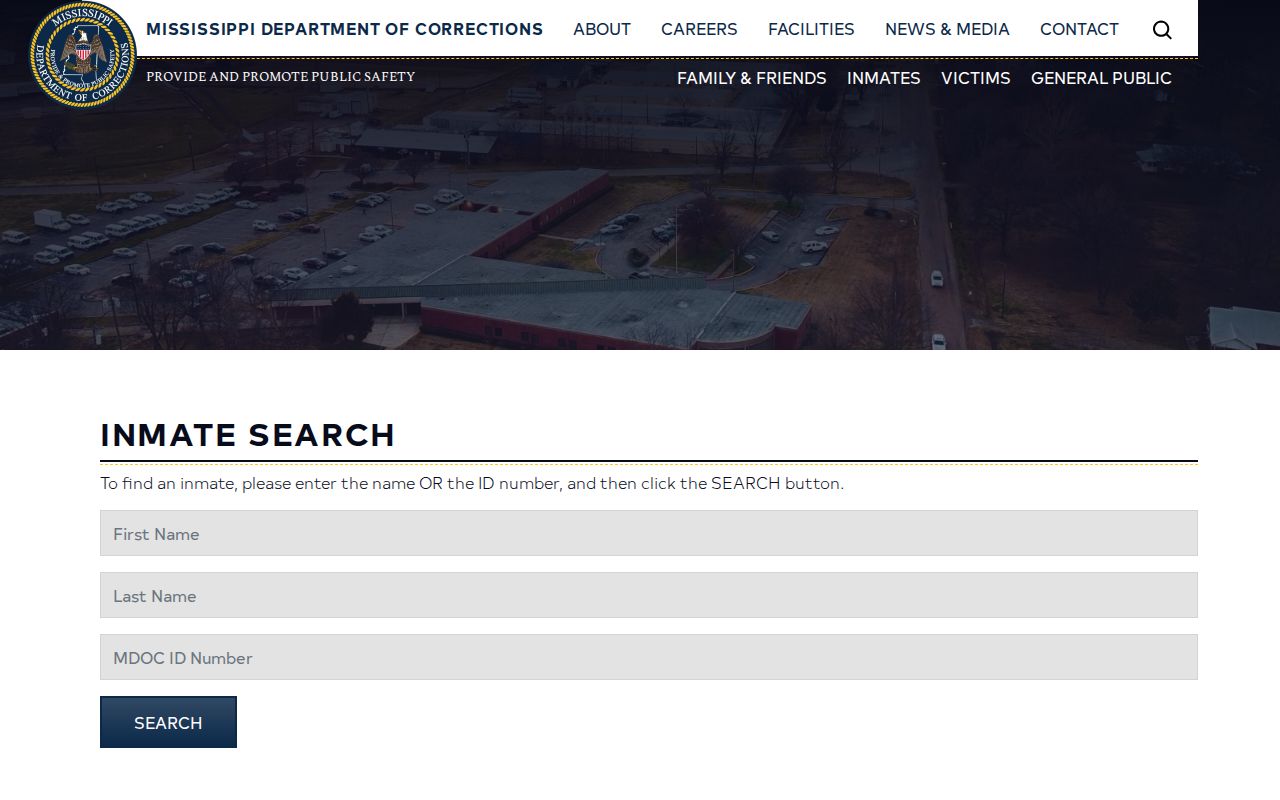
The search must be paired with the detail page and current agency records before a state release is treated as accomplished.
Note: An MDOC search result covers state corrections only and cannot establish a county-only Clarke County Jail release.
MDOC Clarke Release Search Fields
The reviewed public detail example displays more than a date. Its fields allow a result to be checked for identity and sentence context. They include an offender photograph, name, MDOC ID, race, sex, date of birth, physical details, MDOC entry date, current location and unit, location-change date, sentence count, total sentence length, offense, county of conviction, and sentence date.
| Field group | How it helps | Limit |
|---|---|---|
| Name and MDOC ID | Identifies the state record | A name alone can collide |
| Location and unit | Shows the published state placement | May change after movement |
| Offense and conviction county | Checks whether the sentence matches | Does not prove current release |
| Tentative Release Date | Shows MDOC's calculated estimate | Not an actual-release certificate |
MDOC warns that release types and dates may differ because of state law. Sentence changes, county-jail credit corrections, consecutive or concurrent terms, eligibility rules, earned credits or forfeitures, court orders, detainers, and agency decisions can alter the calculation. A stale image must never override the current detail record or Records Department response.
MDOC Clarke Release Records Contact
When an actual event or computation needs confirmation, use the MDOC contact directory and contact Records with the MDOC ID. Ask for the time computation, actual release or discharge date, release type, supervision status, and discharge certificate if publicly available. If the displayed tentative date is disputed, ask what sentences the computation aggregates, what jail credit was applied, and whether another hold affects the date.
MDOC Records DepartmentP.O. Box 24388
Jackson, MS 39225
Phone: 601-933-2889
Email: MDOCRecordsDepartment@mdoc.state.ms.us
MDOC's family and friends material says case managers handle exact release arrangements and travel-plan verification. It describes a release-planning process that can take weeks, but that planning interval is not a promise that the public web date will be exact. Near the date, obtain the actual event and resulting status rather than assuming departure.
Note: Include the MDOC ID and the date the public result was viewed so Records can address the same state-custody episode.
Confirm an MDOC Clarke Release
A released state prisoner can move to parole or another form of MDOC jurisdiction. A fully discharged person may no longer appear in a current parole record. Mississippi SAVIN/VINE may report a release, transfer, escape, return, or other event contributed by a participating agency. These outcomes must not be collapsed into a single idea of freedom.
After a state record shifts out of a current-custody posture, search the separate MDOC Parolee Search. Compare name, ID, city, and county. A match can support a public supervision link. Then check VINE for the custody-change event and ask MDOC Records for the actual release or discharge record. If parole was involved, the State Parole Board controls the decision while MDOC supervises the released person.
- Release
- Departure from the named custody setting, possibly into supervision or another agency's control.
- Parole
- Conditional state-prison release granted by the Mississippi State Parole Board.
- ERS
- Earned release supervision, a conditional status under MDOC jurisdiction.
- Discharge
- Completion of the controlling state custody or supervision obligation.
The Clarke County release search should be used for a county-only booking. Do not force a local detainee into the state path merely because the county search is human-mediated.
MDOC Clarke Release Date Changes
MDOC begins with the sentence and eligible presentence county-jail credit, then applies sentence structure and legal eligibility. Its Records unit calculates parole, earned-release-supervision, tentative release or discharge, and maximum dates. Consecutive terms run differently from concurrent terms. An amended judgment, corrected credit, disciplinary consequence, detainer, or later legal decision can change the result.
Parole eligibility is not a release order. Eligibility means a case may be considered under governing law, while the Board retains decision authority. Earned release and discharge are also distinct. Mississippi statutes contain offense-date rules, exclusions, and special thresholds, so a simple percentage slogan cannot replace the live computation for one person.
For a locally administered Clarke County sentence, use the sentencing order, credit-for-time-served language, and sheriff's actual release record. No official Clarke County good-time policy or weekend-release practice was located. State sentence math should not be applied to a county term without authority.
MDOC Clarke Record Boundaries
MDOC does not cover every custody system. A county-only release belongs in the sheriff and court records. Federal prison cases belong in the BOP locator and federal docket. Immigration custody belongs with ICE. A USMS pretrial movement may require the federal court order and holding-facility record. No state, federal, or immigration institution was identified as a local Clarke County facility merely because those systems can receive people from the county.
“No MDOC result” can mean the person was never in state custody, identity details differ, the state record changed, or the query is incomplete. “Released” from MDOC can still leave parole, supervision, a detainer, or another sovereign's custody. Identify the agency named in the last reliable movement record and continue there.
Preserve an access date and enough identifiers to reproduce the match. If the website and an official record disagree, ask MDOC Records to explain the current data and obtain the most authoritative maintained document available. That evidence is stronger than a copied result with no date or context.
Note: Follow the agency named in the latest verified movement record instead of treating all custodians as one statewide system.
MDOC Clarke Sentence Records
A state release question often begins with the judgment rather than the public date field. The sentencing order identifies the term, whether multiple terms run together or one after another, and the credit the court directs. MDOC then applies governing law and its records process. If the public detail does not match the judgment, provide the MDOC ID and the specific order to Records and ask whether an amended judgment or jail-credit correction has been entered.
Detainers require special care. A state sentence can reach its release point while another agency has authority to take custody. In that case, departure from an MDOC institution is not necessarily return to the community. Ask MDOC Records for the release type and receiving agency, preserve the VINE event, and follow the receiver. The same rule applies in reverse when Clarke County Jail sends a person to MDOC. The person has left the county building but remains confined.
The actual state release record should be read beside any parole or community-corrections entry. The Parole Board decides whether parole is granted, MDOC handles supervision, and the Clarke Probation & Parole Office is only a local routing point for assigned cases. A state discharge certificate addresses a different endpoint. Arrange the records by date so the tentative calculation, release event, supervision period, and discharge do not blur together.